Fell & Sell Beginner Guide: Your First Safe Sale
Prepare your first loadout, extract safely, turn dungeon loot into a sale, and recover cleanly after a failed run in Fell & Sell.
Direct answer
Craft a usable starter loadout, store one replacement item, and make a safe return your first goal. Sell the recovered haul, then reinvest in the bottleneck that will improve your next loop.
Quick answer
- Keep replacement equipment outside your carried loadout.
- Extract when your healing, stamina, space, or equipment margin feels thin.
- Spend the first sale on the problem holding back the next run.
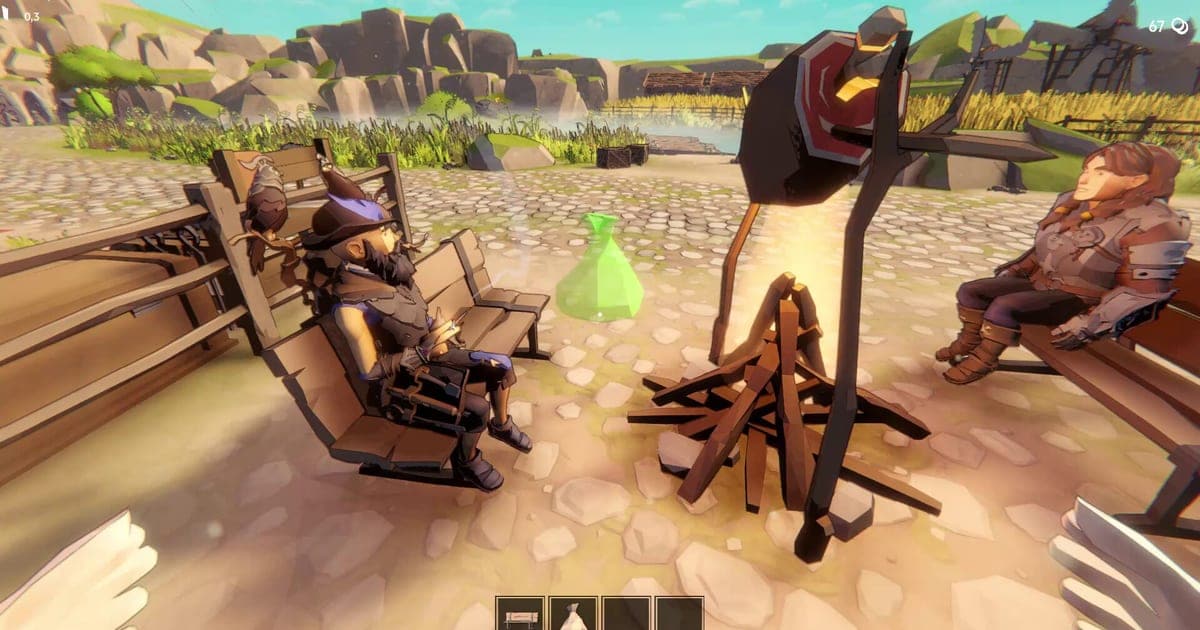
Your First Safe Loop
Treat your first secure return as the finish line, not the deepest floor you can reach. A good opening loop prepares a usable loadout, protects one replacement item in storage, banks a dungeon haul, and turns part of that haul into a completed shop sale.
| Phase | Action | Progress check |
|---|---|---|
| Before the run | Craft usable starter equipment and store at least one replacement item. | You can enter with a working loadout while a backup remains outside it. |
| In the dungeon | Gather loot while watching healing, stamina, carrying room, and equipment condition. | You still have a comfortable margin to reach safety. |
| After extraction | Craft useful stock, place it on a fixture, set a price, and let a customer buy it. | Loot has become a secure return and a completed sale. |
- Craft a usable starter loadout for the first dungeon trip.
- Leave at least one replacement item in storage before carrying gear into danger.
- Enter the dungeon with a safe return as the main objective.
- Extract when healing, stamina, carrying room, or equipment condition stops leaving a comfortable margin.
- Craft part of the recovered haul into stock, place and price it, complete a sale, then reinvest in the next bottleneck.
A Current Beginner Dungeon-to-Shop Run
Watch a current launch-build playthrough move through preparation, dungeon decisions, extraction, and the shop loop.
Decide When to Extract
Deeper floors can offer rarer loot, but death removes the entire unbanked haul. For a first run, the right question is whether every part of the current margin can still support one more floor and a return.
| Check | Continue only when | Extract when |
|---|---|---|
| Healing | You retain a comfortable recovery margin. | Another difficult encounter could consume the remaining margin. |
| Stamina | Movement still feels sustainable. | Normal movement already strains what remains. |
| Carrying room | There is room for loot worth the extra risk. | The haul is already crowding available capacity. |
| Equipment condition | The loadout still supports another floor. | Wear makes the next floor harder to finish safely. |
Use this as a practical decision checklist, not a hidden numeric rule. A secure early haul creates shop progress; a lost unbanked haul creates a recovery run. For a more detailed push, follow the dungeon preparation and extraction plan before choosing deeper floors.
Turn the Haul into Progress
Once you return, recovered materials can become crafted stock. Put that stock on a shop fixture, set its price, and complete a customer sale. That sale closes the first full loop and gives you a useful point to judge the next investment.
Choose the reinvestment by naming the current bottleneck:
| Bottleneck | Useful first response |
|---|---|
| The next run lacks a dependable loadout | Improve or replace equipment. |
| A failed run would leave no restart option | Preserve more replacement gear in storage. |
| Stock has nowhere useful to sit | Add or restore a display fixture. |
| The current space limits the shop plan | Save toward the next shop upgrade. |
Before consuming scarce materials, compare the equipment, furniture, storage, and selling choices in the crafting workflow. When the item reaches a fixture, use the customer-feedback pricing workflow to adjust the listing without guessing blindly.
Your post-run checkpoint is simple: the haul is home, at least one item has moved through the shop, and the proceeds have a specific job in the next loop.
Recover After a Death
Items still carried in the dungeon are lost on death. Recovery starts with whatever stayed outside that haul, which is why the stored replacement matters before the first trip.
- Equip the replacement item kept in storage.
- Avoid repeating the same dungeon risk with an incomplete loadout.
- Use lower-risk forest resources to rebuild the missing equipment or stock.
- Return to the dungeon after the loadout once again leaves a safe operating margin.
The visible recovery check is a workable loadout plus another stored fallback, rather than an immediate attempt to win back the lost haul. The forest resource route for rebuilding basic supplies is the practical next step when storage alone cannot restore the setup.
Frequently Asked Questions
Was this helpful?
Continue reading
These related Fell & Sell pages answer the next questions around this topic.